Introduction
Buying an electric vehicle (EV) is one of the smartest financial moves you can make in 2026—but only if you fuel it correctly. If you are treating your new EV like a gas car, relying exclusively on public fast-charging stations, you are burning money.
While public chargers are convenient for road trips, they charge a premium for that speed. In fact, some DC fast-charging networks now cost nearly as much as gasoline per mile. The real secret to unlocking the “almost free” driving promised by EV manufacturers lies in your own garage.
By shifting your fueling habits to your driveway, you can slash your operating costs by 50% to 70%. But the savings go deeper than just the electricity rate. From tax credits that are about to expire to preserving your car’s resale value, here is the ultimate financial guide to why home charging is the engine of wealth for EV owners.
1. Stop Paying Public Charging Premiums
In 2026, the cost to charge electric car at home averages about $0.18 per kilowatt-hour (kWh) across the US. Contrast that with public DC fast chargers, which now average $0.48 per kWh—nearly triple the price.
If you drive 12,000 miles a year, relying solely on public chargers could cost you upwards of $1,600 annually. Charging at home brings that bill down to roughly $600. That is a guaranteed $1,000 in your pocket every single year, just by changing where you plug in. Public charging networks have to pay for expensive hardware, land leases, and demand charges, and they pass those costs directly to you. At home, you pay what the utility company charges, with no middleman markup.
2. Switch to Time-of-Use (TOU) Rates
Most utility companies in 2026 offer specialized “Time-of-Use” (TOU) rate plans for EV owners. These plans incentivize you to use heavy appliances—like your car charger—during “off-peak” hours, typically between 11 PM and 6 AM when demand on the grid is low.
By scheduling your charge during these windows, you can pay rates as low as $0.08 to $0.12 per kWh. This is the financial equivalent of paying $0.70 for a gallon of gas. Most modern EVs and smart chargers allow you to plug in when you get home at 6 PM but delay the actual energy draw until the cheap rates kick in at midnight. Check your utility’s website today; switching plans is free and can instantly lower your monthly bill.
3. Claim the 30% Federal Tax Credit Now
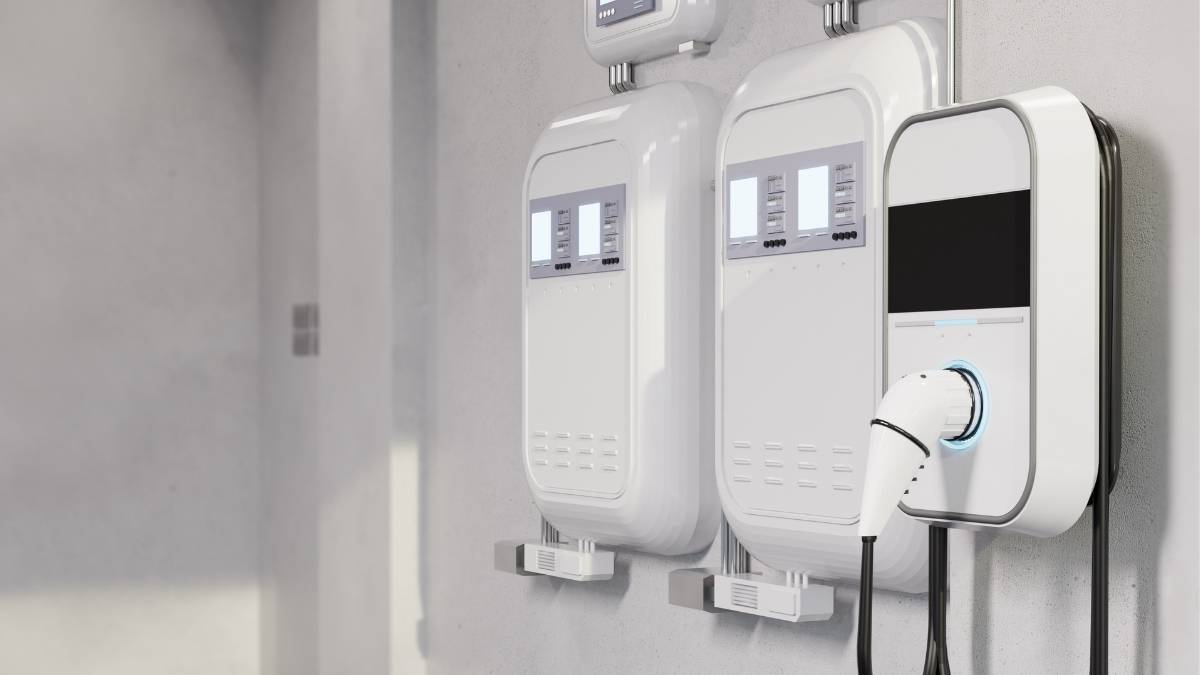
If you haven’t installed a Level 2 home charger yet, you are racing against the clock. The federal tax credit for alternative fuel vehicle refueling property (Form 8911) is set to expire on June 30, 2026.
This credit covers 30% of the hardware and installation costs, up to $1,000. If your installation costs $2,000, Uncle Sam effectively hands you $600 back. This drastically improves your level 2 charger installation roi. However, you must have the equipment installed and operational before the deadline. Waiting until the second half of the year could cost you hundreds of dollars in lost incentives.
4. Protect Your Battery’s Resale Value
Financial savings aren’t just about what you spend today; they are about what your car is worth tomorrow. Frequent use of public DC fast chargers generates immense heat, which stresses the battery chemistry and accelerates degradation.
Home charging (Level 2) is “slow” charging, which is significantly gentler on the battery pack. A 2026 EV that has been primarily slow-charged will likely have 5-10% more battery health after five years than one that lived at Superchargers. When you go to sell or trade in your car, that extra battery health translates into thousands of dollars in retained value. Think of home charging as preventative medicine for your car’s most expensive component.
5. Avoid Hidden “Idle Fees”
Public chargers have a nasty hidden cost: idle fees. If you leave your car plugged in after it reaches 100% (or the charging limit), networks like Electrify America and Tesla charge anywhere from $0.40 to $1.00 per minute as a penalty.
It is easy to get distracted while shopping or dining and return 20 minutes late to find a $20 penalty added to your bill. At home, there are no idle fees. You can leave your car plugged in all weekend without paying a cent extra. This eliminates the “anxiety tax” of constantly checking your phone to see if your charge is done.
6. Use an Electric Car Electricity Bill Calculator
Before you commit to a charger installation, you need to run the numbers for your specific situation. Use an online electric car electricity bill calculator to input your local kWh rate, your car’s efficiency (miles per kWh), and your annual mileage.
These tools help you visualize your “break-even point.” For most drivers, the cost of installing a Level 2 charger ($800 – $1,200) pays for itself in gas savings within 8 to 14 months. Seeing the hard data helps justify the upfront cost of the electrician. If you plan to keep your EV for more than a year, the math is almost undeniably in favor of home charging.
7. Future-Proof Your Home’s Value
Finally, view the installation cost not as a car expense, but as a home improvement. In 2026, a “Level 2 EV Ready” garage is a desirable feature for homebuyers.
Real estate data suggests that homes with pre-installed EV charging infrastructure sell faster and for a slight premium compared to those without. As EV adoption climbs toward 30% of the market, the next family buying your house will likely have an electric car. You are essentially upgrading your property’s utility, making the installation cost a recoverable investment rather than a sunk cost.
Conclusion
Charging at home is the “secret weapon” of EV ownership. It transforms your vehicle from a tech gadget into a genuine money-saving machine. While the upfront cost of installation can feel like a hurdle, the long-term math is undeniable.
By combining the low cost of residential electricity with time-of-use rates and the expiring federal tax credit, you can save thousands of dollars over the life of your vehicle. Don’t let the convenience of public chargers drain your wallet. Take control of your energy, install a charger, and drive past the “pump” with a smile.